Buyer’s guide
Clear aligners are everywhere. Invisalign is not just another one.
Walk into any dental clinic in Dubai or Abu Dhabi and you will hear about clear aligners. They have quietly replaced traditional metal braces as the first choice for adults and teens who want straighter teeth without a mouth full of wires. But once you start asking for prices, you realise there are half a dozen brands on offer, all promising the same result. So what actually sets Invisalign apart from the rest, and is the extra cost worth it in the UAE market? This guide walks you through what to check before you commit.
Clear aligner treatment has grown fast because the underlying technology finally caught up with the idea. Digital scanning, 3D printing, and machine-learning models that predict how each tooth will move have turned what used to be a rough plastic mould into a precise medical device. Clear aligners as a category have existed since the late 1990s, but the last decade is when they became genuinely competitive with fixed braces for most common cases.
Invisalign, made by Align Technology, was the first to bring this model to market at scale, and it still holds the largest dataset of treated cases in the world. That gap in experience is where most of the practical differences begin. Newer brands like Angel Aligners, ClearCorrect, Spark, and Smilie have closed part of the gap, but not all of it.
Before you sign anything
The 7-point buyer’s checklist
Use this list on your first consultation. Any clinic in the UAE offering clear aligners should be able to answer every point without hesitation. If they cannot, that is your signal to keep looking.
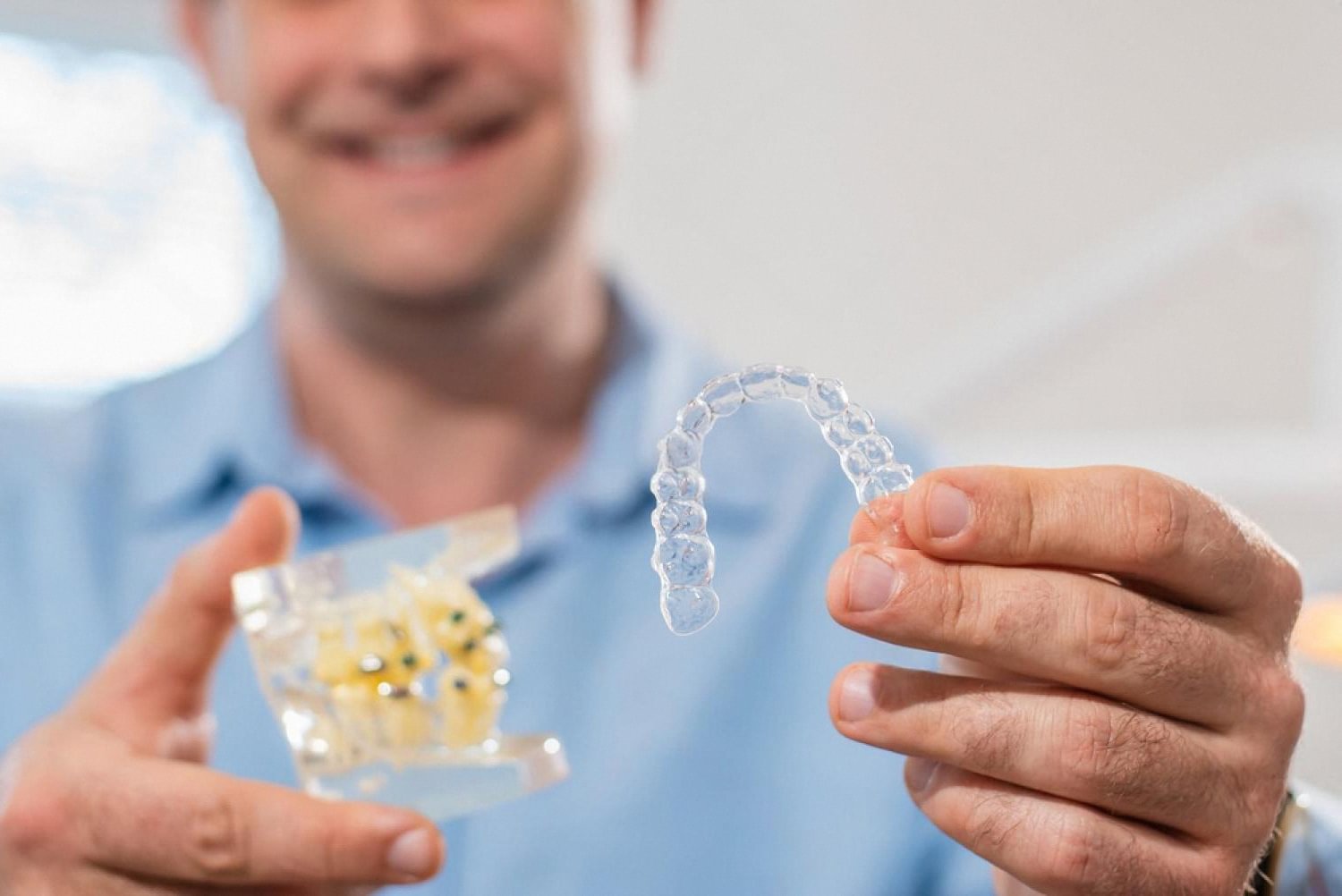
- Is each tray custom-designed for your teeth? Invisalign uses SmartTrack material and a scan-based Invisalign treatment plan where every single tray is individually shaped to move specific teeth by fractions of a millimetre. Generic aligners often reuse standard shapes.
- Are the edges scalloped or straight? Scalloped, trimmed edges follow the gum line and feel less bulky. Straight-cut trays are cheaper to make but rub the inside of the lip.
- Does the plan use SmartForce attachments? These small tooth-coloured bumps let the aligner grip and rotate teeth that would otherwise slip. Not every brand offers them.
- How many refinements are included? Ask upfront. A serious plan builds in 2 to 3 refinement rounds at no extra charge.
- What is the total treatment window? Mild cases finish in 6 months, moderate cases in 12 to 18 months. Anything promising a full correction in 3 months is optimistic marketing.
- Who monitors your progress? A qualified orthodontist, not a general dentist working from a template, should be reviewing your scans every 6 to 8 weeks.
- Is a retainer included after treatment? Teeth drift back if you stop wearing retainers. The final quote should include Vivera or equivalent retainers, not add them later as a surprise.
Point 1 in depth
Why the custom design matters more than the plastic
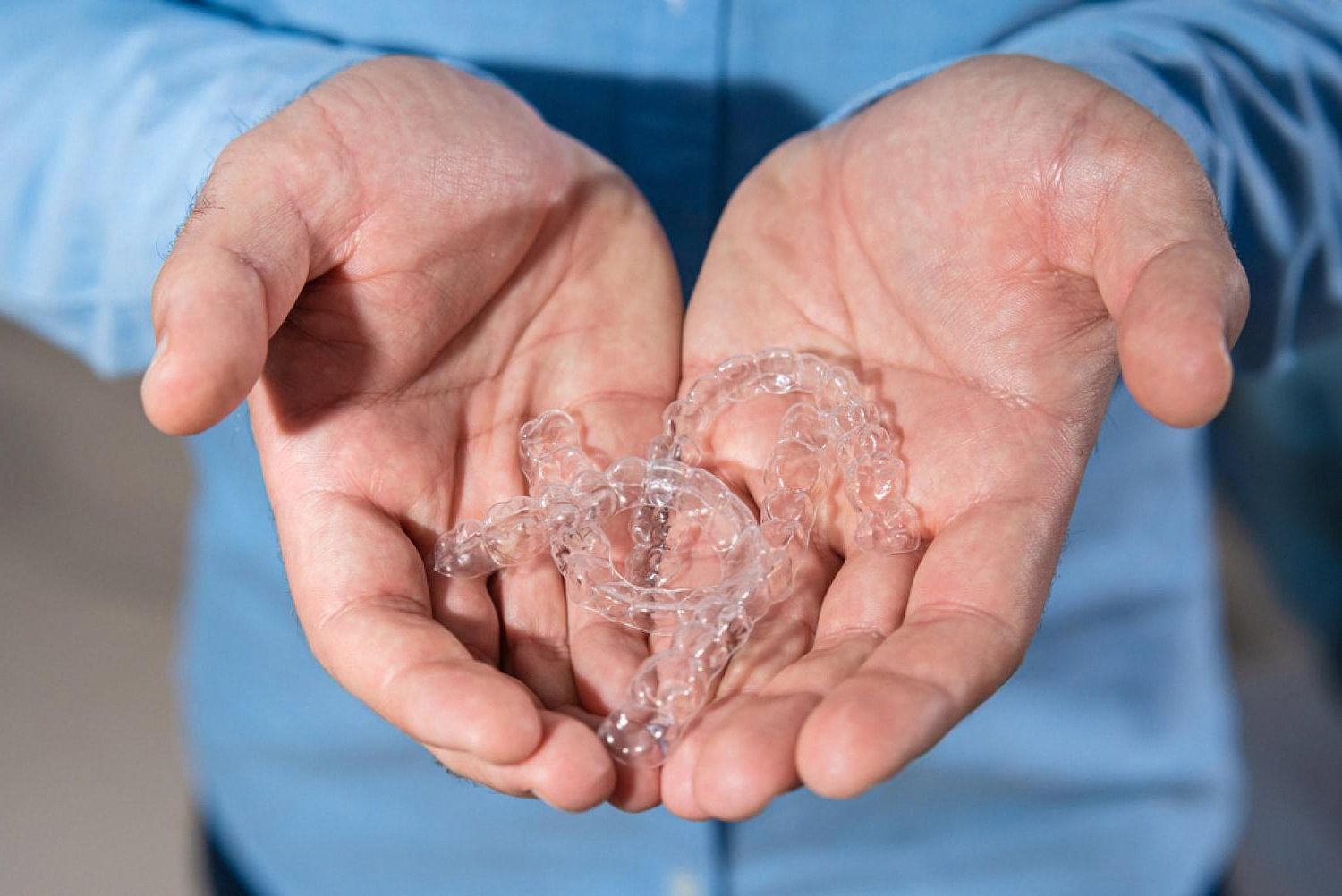
Every Invisalign tray is generated from a 3D scan of your mouth and then modelled through the ClinCheck software, which simulates how each tooth needs to rotate, tilt, and slide over the course of treatment. You typically get a series of 20 to 40 aligners, and each one is designed to move specific teeth by roughly 0.25 mm before you switch to the next.
Cheaper aligner brands and mail-order kits often skip this step. They take a single impression, plan the endpoint, and interpolate the trays in between with less clinical review. The trays fit, but the pressure vectors are less precise, which is why complex cases stall or need constant re-work.
The material also behaves differently. SmartTrack is designed to hold consistent force for the full 20 to 22 hours a day you wear it, rather than dropping off after the first few hours. That sustained pressure is what actually moves the root of the tooth, not just the crown.
Point 3 in depth
Comfort, removability, and daily life in the UAE
Invisalign trays are smooth, thin, and shaped to sit flush against the gum line. Most patients say the first two days of a new tray feel tight, then the sensation fades. There are no wires to catch on the inside of your cheek and no brackets to trap food.
The removable design is the part that matters most for daily life here. You take the trays out to eat karak, biryani, or a business lunch at DIFC, then put them back in after a quick brush. You can also remove them for a photograph at a wedding or a work event, which is a real consideration for anyone in a client-facing role.
The catch is discipline. If you wear them under 20 hours a day, treatment slows down or fails. That trade-off, freedom in exchange for personal responsibility, is the honest bargain of any clear aligner system.
Which problems Invisalign is actually good at
Not every misalignment is a candidate. Here is where the evidence is strongest, based on American Association of Orthodontists guidance and Align Technology’s published case data.
- Crowded teeth. When there is not enough space in the arch, Invisalign can create room through controlled expansion or, in some cases, minor interproximal reduction.
- Gaps between teeth. Diastemas and general spacing close predictably, often faster than crowding cases.
- Mild to moderate bite issues. Overbites, underbites, and crossbites in the mild to moderate range respond well, especially with elastics attached to the aligners.
- Crooked or rotated teeth. Rotations up to about 20 degrees are routine with the right attachments.
Severe skeletal bite problems, impacted canines, or cases needing significant vertical movement still lean toward fixed braces or a combined approach. A good orthodontist will tell you honestly which camp your mouth falls into.
Reference table: Invisalign vs typical alternatives in the UAE
| Factor | Invisalign | Other branded aligners | Mail-order kits |
|---|---|---|---|
| In-person orthodontist | Required | Usually required | Not required |
| 3D scan & custom trays | Yes, every tray | Yes, most brands | Single impression at home |
| Attachments for rotation | SmartForce, extensive | Available, more limited | Rare |
| Suitable case complexity | Mild to complex | Mild to moderate | Mild cosmetic only |
| Typical UAE price range | AED 15,000 to 30,000 | AED 9,000 to 18,000 | AED 3,000 to 6,000 |
| Refinements included | Commonly 2 to 3 | Often 1 | Rare |
| Retainers included | Often, ask to confirm | Sometimes | Extra cost |
Prices vary between clinics in Dubai, Abu Dhabi, and Sharjah. The higher end usually reflects a more experienced orthodontist and a longer, more complex plan rather than a markup on the plastic itself.
Next step
Book a consultation before you commit
The right way to decide is not by reading more articles, it is by getting a proper scan and a written plan. Dr Saba’s clinic offers both Invisalign and Angel Aligners consultations, so you get a fair comparison against your actual bite, not a generic sales pitch. Ask for the treatment simulation, review the aligner count, and check the refinement policy before you say yes.
Frequently asked questions
How long does Invisalign treatment usually take in the UAE?
Most cases finish between 6 and 18 months. Mild spacing or crowding can wrap up in around 6 months, while moderate bite corrections usually run 12 to 18 months.
Your orthodontist will confirm a specific window after the 3D scan, since the number of trays depends on how much each tooth needs to move.
Is Invisalign more expensive than other clear aligners in Dubai?
Yes, generally. Invisalign in the UAE typically ranges from AED 15,000 to AED 30,000, while other branded aligners often sit between AED 9,000 and AED 18,000.
The gap reflects the volume of clinical data behind Invisalign, the SmartTrack material, and the number of refinements usually included. Whether the extra cost is worth it depends on how complex your case is.
Can I eat and drink normally with Invisalign?
You take the trays out to eat and drink anything other than plain water. That means you can enjoy Emirati cuisine, coffee, and hot meals without worrying about staining the plastic or damaging brackets.
Brush your teeth before putting the aligners back in, otherwise food particles get trapped against the enamel for hours.
Will Invisalign work for a severe bite problem?
Mild and moderate bite issues, including overbites, underbites, and crossbites, respond well to Invisalign, often with the help of small elastics attached to the aligners.
Severe skeletal bite problems may still need fixed braces or a combined orthodontic and surgical approach. A qualified orthodontist can tell you which category your case falls into after reviewing the scans.
Do I need to wear a retainer after Invisalign?
Yes. Teeth naturally drift over time, and without a retainer, some of the movement you paid for will reverse within a year or two.
Most Invisalign plans include Vivera retainers or an equivalent, which you wear full-time for a few months and then only at night for the long term.
How is Invisalign different from mail-order aligner kits?
Mail-order kits skip the in-person examination. You take an impression at home, send it in, and receive a full set of trays with no ongoing supervision.
Invisalign requires a qualified orthodontist to scan your mouth, review your progress every few weeks, and adjust the plan if teeth do not track as expected. That supervision is what keeps complex movements safe and predictable.

Hiking addict, ramen eater, fender owner, Saul Bass fan and javascripter. Acting at the fulcrum of beauty and computer science to give life to your brand. My opinions belong to nobody but myself. Tropical swift lover.